
Welcome to our blog, dedicated to crafting unforgettable outdoor events! Today, we are focusing on a key topic: eco-friendly events. As event professionals, we firmly believe that creating sustainable and responsible events is not only possible but essential.
In this article, you’ll discover a practical, easy-to-implement approach perfectly suited for your events.
Can an Event Be Completely Eco-Friendly or Sustainable?
The short answer is NO, unless you are organizing an eco-cleanup event in your neighbourhood or a community waste collection initiative. In fact, I have a cousin who organizes such events every year, and I fully support his efforts. (To help my cousin with his initiative, click here.)
But beyond that, a wedding, product launch, or gala event can never be 100% eco-friendly and sustainable. Simply transporting your guests and suppliers consumes energy and significantly increases your carbon footprint. That’s why we talk about eco-responsible and sustainable events where the goal is to minimize environmental impact as much as possible while still creating meaningful experiences.
What Is an Eco-Responsible Event?
An eco-responsible event is designed and organized to minimize its environmental impact. This involves thoughtful choices at every stage: venue selection, suppliers, waste management, materials used, and more.
In Switzerland, this can also mean working with local artisans and prioritizing regional products from short supply chains. The goal is to reduce the carbon footprint, conserve resources, and promote more sustainable practices while maintaining the highest quality standards.
Key Questions to Ask for a More Eco-Friendly Event
How to Choose Eco-Responsible Vendors?
Prioritize local suppliers to reduce carbon emissions from transportation. For example, opt for an organic caterer or a company specializing in sustainable furniture rentals. In Switzerland, many providers are committed to eco-friendly practices, making it easier to find high-quality, responsible options.
Choose reusable or recyclable materials for decorations and other event essentials.

Credit Photo: Stunning Tents
Reduce Transportation Impact : In Switzerland, a significant portion of an event’s carbon emissions comes from travel. To minimize this, prioritize local products and make your venue easily accessible by public transport—for example, by arranging a shuttle service from the nearest train station.
A concrete example: if you’re organizing a festival, choose local flooring suppliers or use event mats, which are much lighter and require less transport, reducing both costs and environmental impact.
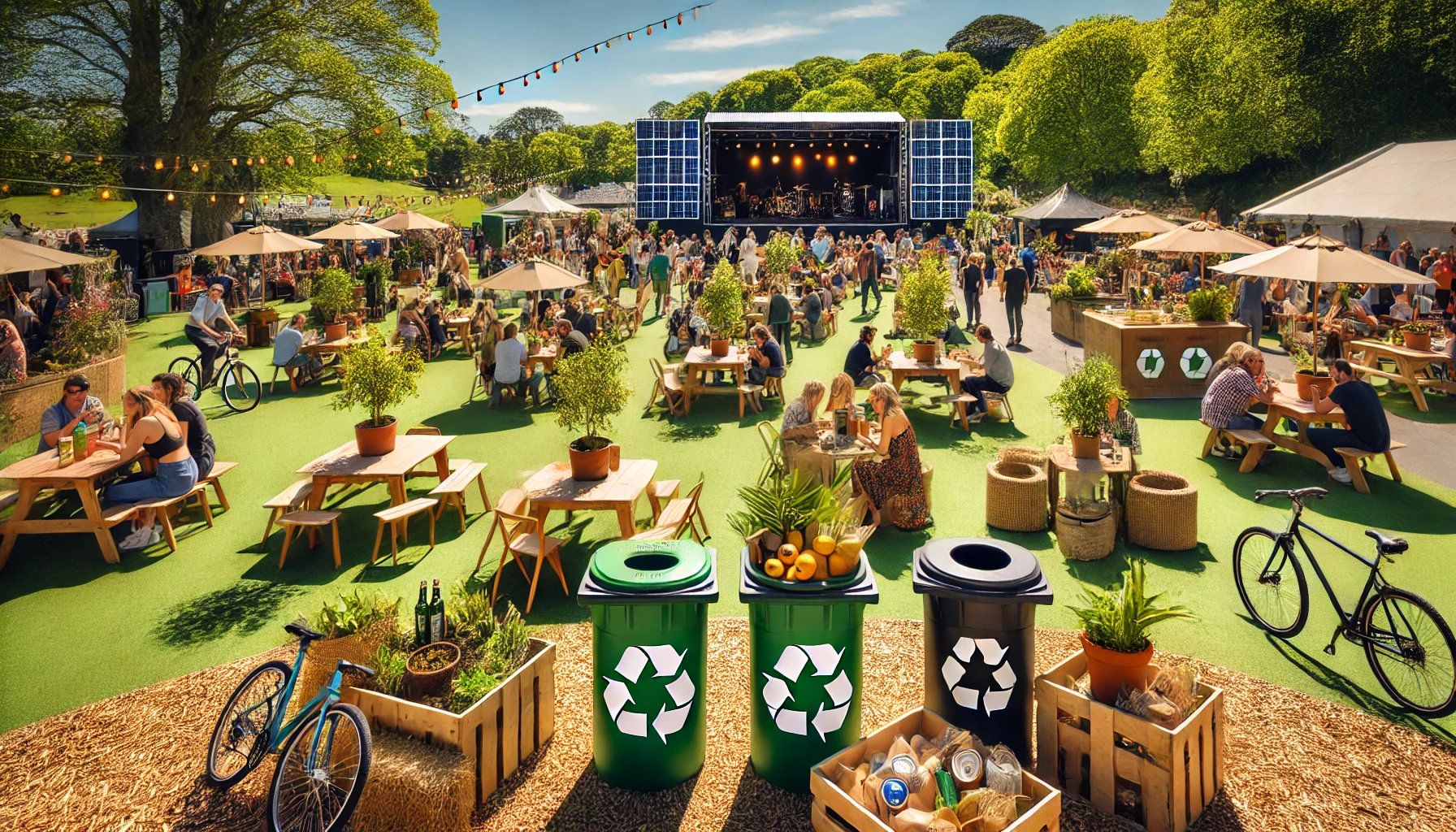
How to Reduce Waste and Minimize Environmental Impact at Your Event?
Implement an efficient waste-sorting system.
For example, a venue could partner with a local organization to manage organic waste during a themed event. In Switzerland, many municipalities and associations offer composting and recycling solutions to help events stay eco-friendly.

Prefer Reusable or Compostable Tableware and Minimize Excess Packaging
Give new life to decorative items: for example, wedding flowers can be replanted or donated to a local retirement home.
Be cautious with well-intentioned choices: a reusable plastic item can be more eco-friendly than a disposable organic material, as long as it is actually used multiple times.
Switching to zero waste can be challenging, but the approach is simple—by composting organic waste and avoiding low-quality plastic giveaways, we can certainly make it happen! In Switzerland, initiatives like composting and reducing single-use plastic are already gaining momentum, making it easier to adopt more sustainable practices.
How to Raise Awareness and Involve Your Guests?
Inform them about the initiatives in place, for example, by using signage or making announcements Guests are often receptive to sustainable practices, so highlighting eco-friendly actions can help foster a sense of participation and shared responsibility.
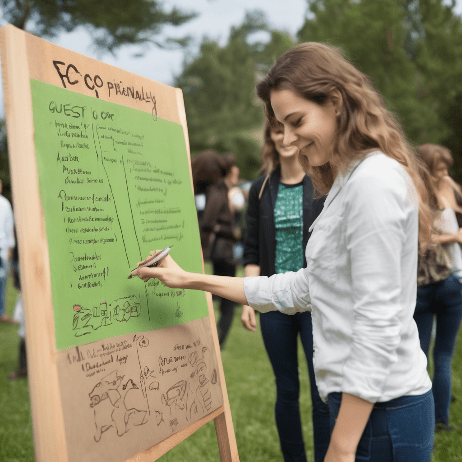
Organize eco-responsible activities, such as planting trees during a corporate seminar, or invite participants to make their own souvenirs using recycled materials. It will create a unique memory for your guests.

In the context of organizing eco-responsible events, the issues related to paper consumption and its environmental impact are significant. Organizers must adopt innovative solutions to reduce paper use in communications by prioritizing digital tools. For example, digital guides can replace printed brochures, while ensuring effective information distribution. Labeling suppliers who engage in sustainable practices is also an advantage, helping create a cohesive team based on eco-responsible values.
By integrating concrete actions to reduce emissions associated with the event, such as using recycled materials or optimizing water consumption, organizers can not only minimize the paper impact but also inspire others in the industry. Eco-friendly festivals, for example, demonstrate how these ideas can come to life, proving that every action, no matter how small, has its place in a broader sustainability effort, particularly in Switzerland where environmental awareness is deeply valued.
The Benefits of an Eco-Responsible and Sustainable Event
Beyond its positive environmental impact, an eco-responsible event offers many other benefits:
- A stronger and more respected brand image among participants, as detailed in the section on CSR (Corporate Social Responsibility) below.
- Financial savings through better resource management, including energy efficiency.
- A memorable and authentic experience for your guests.
- A concrete contribution to environmental preservation.
Let’s Talk about CSR
If you work in a medium or large company, you have likely seen the rise of Corporate Social Responsibility (CSR). So, what is this sustainable approach, “CSR,” and how can a company be more responsible when organizing events?
The calculation of a company’s CSR isn’t based on a single formula, as it encompasses various dimensions, including social, environmental, and economic aspects. Here are some key factors to evaluate a company’s eco-approach:
- Environmental indicators: Carbon footprint, waste management, energy consumption.
- Social indicators: Working conditions, community engagement, diversity, and inclusion.
- Economic indicators: Financial performance, relationships with stakeholders.
Many companies publish an annual CSR report, showcasing their development, results, various sustainability certifications, and goals. This report may include both quantitative and qualitative data on CSR performance. Some companies adopt standards or labels that provide frameworks to evaluate and improve event best practices.
In addition to the benefits mentioned earlier, companies with a positive impact on ecosystems will attract more and more talent, especially younger generations who prioritize working for companies with a responsible approach. Organizing events in line with CSR can foster a sense of belonging and motivation within the team.
Avoiding the Pitfalls of Greenwashing in an Eco-Responsible Event
Greenwashing represents a major risk in organizing eco-responsible events. It is a practice where companies claim to be environmentally responsible without implementing genuine actions that benefit the environment. This deception can mislead consumers and participants, making them believe they are supporting sustainable initiatives when, in reality, the commitments are superficial. Additionally, the absence of a reliable eco-label makes it difficult for consumers to assess the sincerity of the promises.
Greenwashing can also harm the credibility of true environmental efforts, creating confusion about what constitutes an authentic approach. The stakes are even higher in the transportation sector, where misleading claims about environmental impact can have harmful consequences. Ultimately, it can lead to disillusionment and distrust towards events and brands that genuinely strive to reduce their environmental impact, hindering progress toward true sustainability.
To avoid this, it is crucial to promote transparency, clear communication, and highlight demonstrable and verifiable practices.
Examples of Eco-Responsible Events
- A music festival using dry toilets and solar showers.
- A wedding using compostable tableware and natural decorations.
- A product launch with a zero-waste buffet featuring local products.
- A seminar using a water tank to refill participants’ water bottles.
- A wine tasting focusing on local products and reducing transportation.
- A sustainable, carbon-free marathon where the medal is made from recycled materials.
Some Eco-Responsible Events: A Global and Swiss Perspective
Eco-responsible events are growing worldwide, with numerous international and Swiss initiatives making significant strides in sustainability. ChangeNOW, a global summit, gathers innovators and environmental leaders to present solutions for tackling the planet’s environmental challenges, while WeLoveGreen in Paris organizes a festival committed to reducing carbon footprints and conserving resources. Pollutec, another international event, showcases environmental solutions for industries and territories across the globe. On the Swiss front, Green Buzz fosters collaboration among entrepreneurs, experts, and startups in the sustainability sector. The Swiss Green Economy Symposium brings together professionals to discuss strategies for transitioning to a green economy. In Zurich, Sustainability Week provides a platform for exchanging ideas on sustainable urban planning, clean energy, and circular economy. Lastly, BauZentrum Zurich promotes sustainable construction practices with exhibitions and workshops. Together, these events highlight the global and Swiss commitment to eco-friendly practices and sustainable growth.
Have you ever participated in such events?
Add your own event experiences in the comments to expand this list!
Conclusion
Organizing a greener and more sustainable event is not easy, but every little action counts. The development of ecological systems should certainly be supported by government initiatives and more ambitious policies, but at our scale, we can still make a difference. In my profession, incorporating eco-responsible practices brings me closer to nature and gives me a sense of satisfaction.
“I may not have written the ultimate guide with the 8 perfect solutions, but just for that, I say: GO!”
“Together, let’s work for events that are more respectful for our environment.”
Johan D.
Outdoor Event Specialist

Johan D
Passionate about hosting and crafting the perfect atmosphere for unforgettable events, I offer practical tips and tricks, with a touch of humor and a keen eye for detail, to help you enhance your celebrations, ensuring everything goes smoothly.

About
Our Partners
Johan D
Passionate about hosting and crafting the perfect atmosphere for unforgettable events, I offer practical tips and tricks, with a touch of humor and a keen eye for detail, to help you enhance your celebrations, ensuring everything goes smoothly.